
Darts for beginners: Complete step-by-step guide to get started
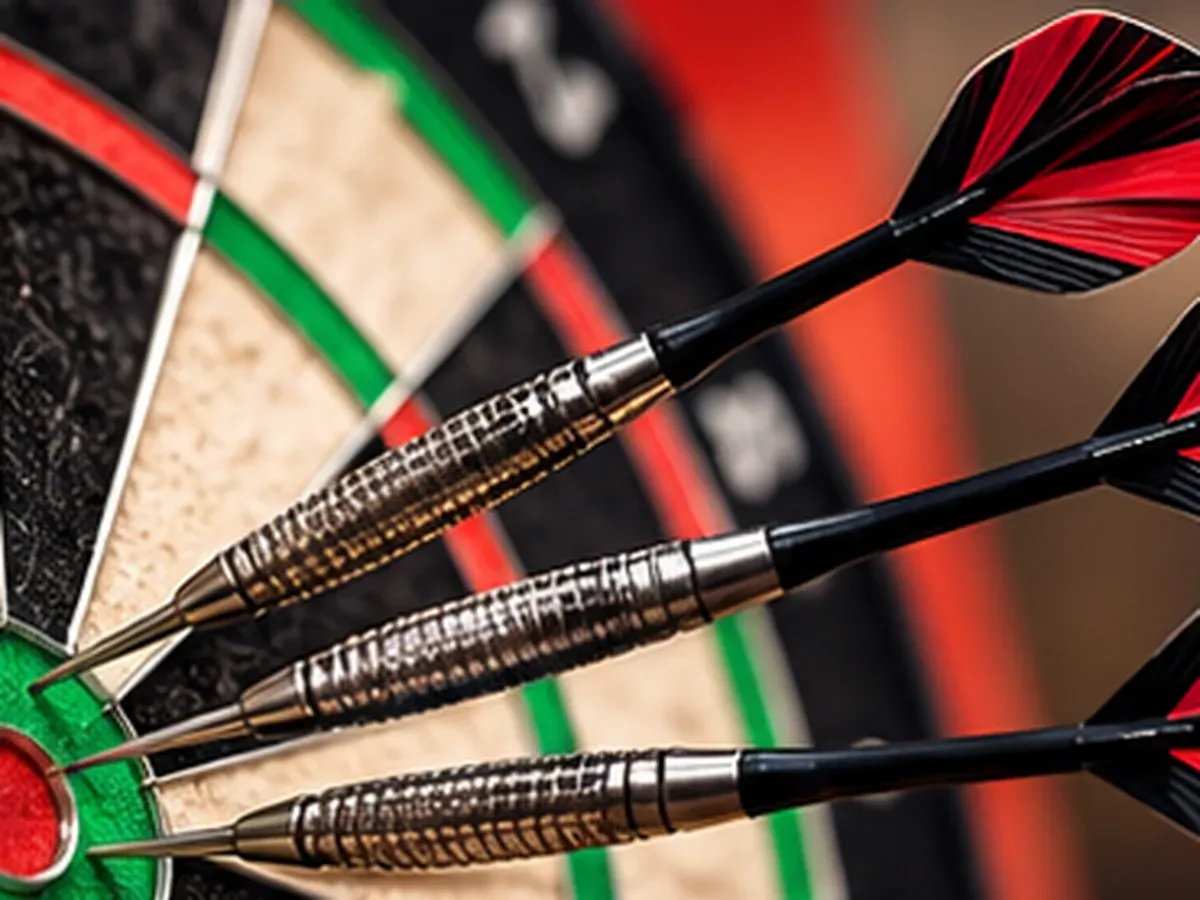
Start now checklist
• Dartboard (bristle or electronic), mounted with the bull at 1.73 m (5 ft 8 in)
• Clear throwing line (oche) marked 2.37 m (7 ft 9.25 in) from the face of the board
• Three darts per player (18–24 g recommended to start)
• Safe, well-lit space with room behind the thrower
If you want to pick up darts quickly, this guide gives the essentials: how to set up an official board, the basic rules for the common 501 game, what gear to buy, a simple throwing routine and a four‑week practice plan that builds real progress.
Official board setup — exact measurements
Mount the board so the centre of the bull (the small red spot) is 1.73 m (5 ft 8 in) above the floor. Measure straight up from the floor to the centre of the bull.
Measure the throwing line (the oche) 2.37 m (7 ft 9.25 in) from the face of the board — that is, from the front surface of the board, not the wall behind it. Mark the oche clearly on the floor; a tape line, wood strip or a small mat works well. For narrow rooms you can also verify clearance with a diagonal measurement from the bull to the toe line, but the horizontal 2.37 m is the key measurement.
Basic objective and turn structure (how to play 501)
The most common competitive game is 501. Each player starts on 501. Players take turns throwing three darts per turn and subtract the total scored from their running total. The goal is to reach exactly zero; the final dart that reaches zero must land in a double segment (the thin outer ring) or the inner bull in some casual games, but for beginners assume a double finish.
Score values: single segments show face value, the thin outer ring doubles that value, the thin inner ring triples it, outer bull is 25, inner bull is 50. Example gameplay below shows how scoring and finishing work in practice.
Worked example: finishing a 501 leg
Turn 1: Player A scores 180 (T20 + T20 + T20). Running total: 501 − 180 = 321.
Turn 2: Player A scores another 180. Running total: 321 − 180 = 141.
Turn 3: Player A throws T20 (60), T19 (57) and D12 (24). That adds to 141 and reaches zero with a double finish. The leg is over.
This shows how three-dart turns subtract from your total and why planning checkouts matters: when you get to a smaller remaining number, you aim for combinations that leave a double you can hit.
Essential beginner equipment
Darts come in two main systems: steel‑tip darts for bristle (sisal) boards and soft‑tip darts for electronic boards. Steel‑tip and sisal boards are standard in most homes and clubs; soft‑tip is common in pubs with electronic scoring.
Beginner weight range: 18–24 grams is a good starting band. Lighter darts (18–20 g) can suit players with a faster, compact throw; heavier darts (22–24 g) feel steadier for slower, longer arm motions. Try a few weights if possible; what feels comfortable is more important than a particular number.
For a starter setup pick a decent bristle (sisal) board and a basic set of steel‑tip darts in the 18–24 g range. Look for darts with simple medium-width barrels and easy-to-replace flights and shafts. Electronic boards are safer around children and automatically keep score, but bristle boards offer more authentic feel and easier maintenance.
Simple 5-step throwing routine
• Stance: Place your dominant foot forward pointing at the board, keep weight balanced and the body steady — don’t twist your torso mid-throw.
• Grip: Hold the dart lightly with three fingers maximum. A firm but relaxed grip prevents tension.
• Aim: Pick a precise target (for example the treble 20) and focus your eyes on that small point, not the whole segment.
• Smooth motion: Bring your throwing arm back and forward in a straight line from the shoulder. Keep the elbow steady — avoid lifting or dropping it during the throw.
• Release and follow-through: Release when your forearm points at the target and let your hand continue forward naturally. A short follow-through helps accuracy.
4‑week practice plan (20–40 throws per session)
Frequency: 3 practice sessions per week. Each session lasts about 20–30 minutes and includes warm-up throws, 20–40 quality throws and one focused drill.
Week 1 — Aim & grouping: Warm up with easy singles, then 3 sets of 20 throws at a single target (treble 20 or a large single if you’re not ready). Work on consistent grip and smooth release.
Week 2 — Scoring: Play short 501 games but stop at a practical checkout. Example: play to reach 80 or below and practice leaving a double (D20, D16). Keep turns competitive but focused on shot selection.
Week 3 — Doubles practice: Spend half the session practising finishing doubles. Start from common finishes (40 = D20, 32 = D16, 16 = D8). Throw 3‑dart routines aiming to leave a double and hit it.
Week 4 — Match practice & consolidation: Play full 501 legs against a partner or a scoring app, applying your doubles and scoring drills. Track progress: fewer darts per leg or more successful checkouts shows improvement.
Progression tip: Gradually increase the proportion of competitive throws (match practice) versus isolated drills as your grouping and checkout percentage rise.
Common beginner mistakes and quick fixes
Dropping the elbow: keeps the throwing line inconsistent. Fix: practise in front of a mirror and keep a steady elbow height during the motion.
Over‑gripping: causes tension and wide throws. Fix: loosen your grip and focus on a relaxed wrist at release.
Stepping over the oche: bad etiquette and can cost points. Fix: mark the line clearly and practise staying behind it. Keep your forward foot anchored.
Basic maintenance
Rotate flights and shafts when worn. For bristle boards, avoid leaving darts in for long periods in the same spot — rotate placement to lengthen board life. For electronic boards, check soft tips frequently and replace bent tips.
Start with the checklist, set up to the measurements above, and follow the throwing routine and practice plan. With consistent short sessions you’ll see steady gains and build confidence quickly.