
How to Throw Darts: Stance, Grip and Release
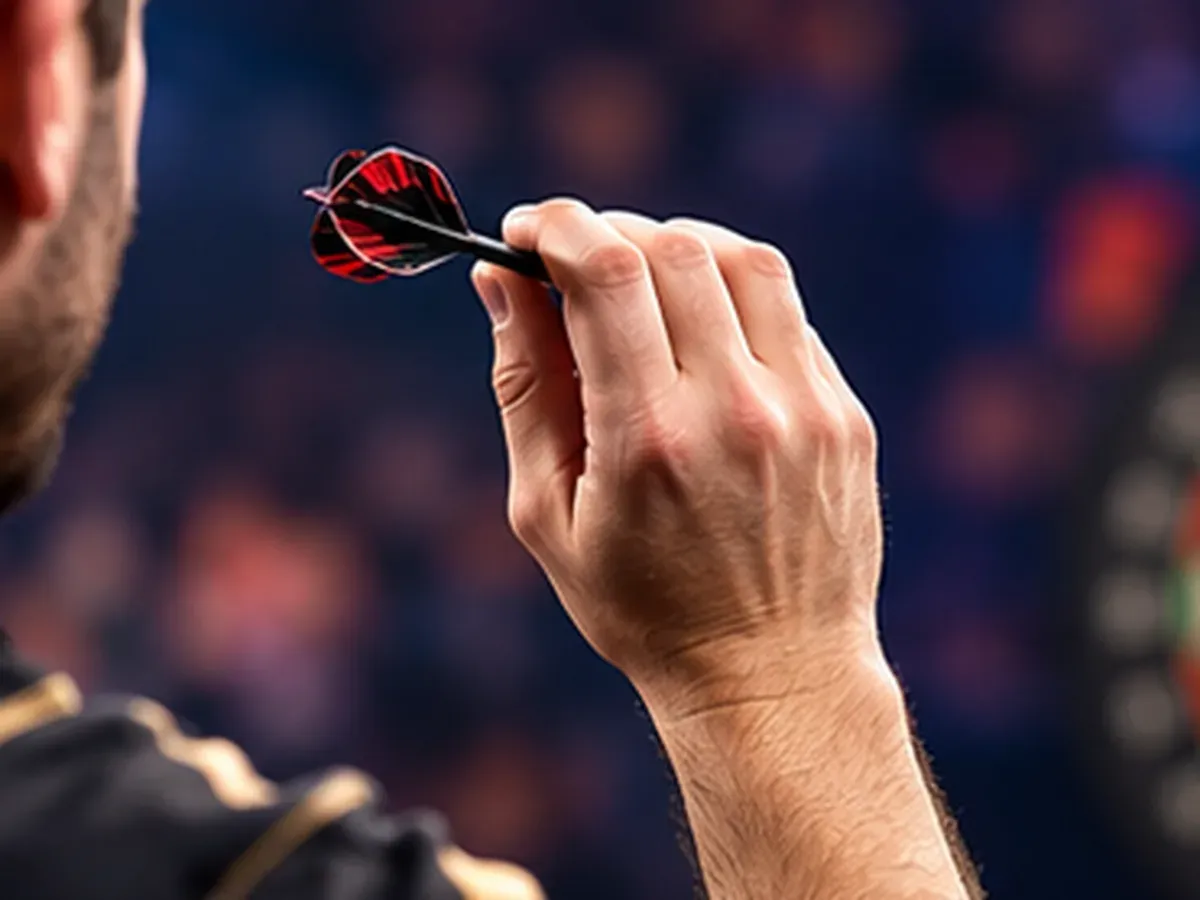
Every great darts player has a slightly different throw, but the best throws all share the same foundations: a stable stance, a relaxed grip, a consistent release and a smooth follow-through. Get those right and your darts start landing where you aim far more often. This guide breaks the throw down step by step, explains the most common mistakes and gives you simple drills to build a repeatable action, whether you are picking up darts for the first time or trying to fix a throw that has gone wrong.
Why consistency beats style
There is no single "correct" throw. Professionals stand differently, grip differently and release at different speeds. What they have in common is repeatability: they make the same movement, in the same way, dart after dart. Your goal is not to copy a famous player but to build a throw that you can repeat under pressure. Every tip below is about removing unnecessary movement so that the only thing that changes from throw to throw is where you aim.
Step 1: Stance
Your stance is the platform for everything else. Most right-handed players stand with their right foot forward at the oche, and most left-handers with their left foot forward. Common options are:
- Side-on stance: your front foot is almost parallel to the oche and your body is turned sideways. It lines your shoulder, elbow and hand up with the board.
- Middle stance: your front foot is angled at roughly 45 degrees. This is the most popular choice because it is both stable and comfortable.
- Front-on stance: your body faces the board more directly. Some players find it natural, but it makes it harder to keep the arm in line.
Put most of your weight on your front foot, keep your back foot lightly on the floor for balance, and avoid swaying. Leaning forward slightly is fine and allowed, as long as your feet stay behind the oche. If you are unsure about the official distances, see our guide to the darts rules.
Step 2: Grip
Hold the dart firmly enough to control it, but loosely enough that it leaves your fingers cleanly. A grip that is too tight creates tension in the forearm and makes the release jerky.
- Number of fingers: most players use three or four fingers. Two-finger grips exist but give less control; five fingers usually adds tension.
- Thumb position: the thumb normally sits under or slightly behind the barrel's centre of gravity.
- Point direction: the point should aim slightly upwards at the moment of release, never down at the floor.
- Same every time: find the spot on the barrel that feels right and pick up every dart in exactly the same way.
The shape and grip of the barrel make a real difference here. A barrel with a heavy front-loaded design, a straight profile or a torpedo shape will each suit a different grip.
Step 3: Aim
Most players aim by lining up the dart, their eye and the target. Hold the dart at eye level, slightly to the side of your dominant eye, so that you can see the target past the flight. Keep your head still. A head that moves between aiming and releasing is one of the most common causes of inconsistency.
Focus on a very specific target, not just "the treble 20" but a single point inside it. A small target sharpens your concentration and means that a near miss still lands in the bed.
Step 4: Throwing motion
A good throw is mostly an elbow and forearm movement. The upper arm should stay relatively still while the forearm swings back and then forward like a hinge.
- Take back: bring the dart back towards your face in a smooth line. How far back is personal; some players go almost to the cheek, others keep it short.
- Acceleration: push the forearm forward smoothly. The speed should come from a steady acceleration, not a sudden jerk.
- Elbow lift: as you throw, your elbow naturally rises a little. This is normal and helps keep the dart on a straight path.
- Wrist: a slight wrist snap at the end adds speed, but too much wrist makes the throw harder to repeat.
Step 5: Release
The release is where many throws go wrong. Let the dart leave your fingers naturally at the end of the acceleration, without "pushing" it or holding on too long. If you release too early, the dart flies high; too late, and it drops low. Practising a smooth, relaxed release is more valuable than throwing harder.
Step 6: Follow-through
After the dart has left your hand, keep your arm moving in the direction of the target. A full follow-through usually ends with your arm extended and your fingers pointing at the board. Stopping the arm abruptly, or pulling it down and away, changes the path of the dart before it has even left your hand. Hold the follow-through for a moment before your next throw.
Common mistakes and how to fix them
- Darts drifting left or right: check that your elbow stays in line and that your shoulder is not swinging.
- Darts landing low: often caused by a late release or no follow-through. Try extending your arm towards the target.
- Darts landing high: usually an early release or too much force. Slow down and focus on a smooth acceleration.
- Inconsistent grouping: look at your grip and stance first. Changing too many things at once makes it impossible to see what helps.
- Throwing too fast: rushing the next dart means skipping your routine. Take a breath and reset between darts.
Drills to build your throw
- Single target: throw 100 darts at the treble 20 and record your grouping. Repeat weekly to track progress.
- Eyes closed: throw a few darts with your eyes closed to focus on how the movement feels. Only do this in a safe setting.
- Slow motion: practise the movement without releasing, very slowly, to check your elbow and follow-through.
- Film yourself: a short video from the side shows elbow movement and follow-through far better than any mirror.
For full structured sessions, see our practice routines. Once your throw is stable, the next step is learning your finishes with our checkout chart.
Frequently asked questions
Which foot should be in front when throwing darts?
Right-handed players usually put their right foot forward, and left-handed players their left foot. Stand however feels most stable, as long as your feet stay behind the oche.
How many fingers should I use to hold a dart?
Three or four fingers is most common. Use the grip that gives you control without tension, and keep it the same every time.
Should I throw hard?
No. A smooth, steady throw with a clean release is more accurate than a hard throw. Speed should come from acceleration, not force.
Back to home