
Darts Practice Routines to Improve Your Game
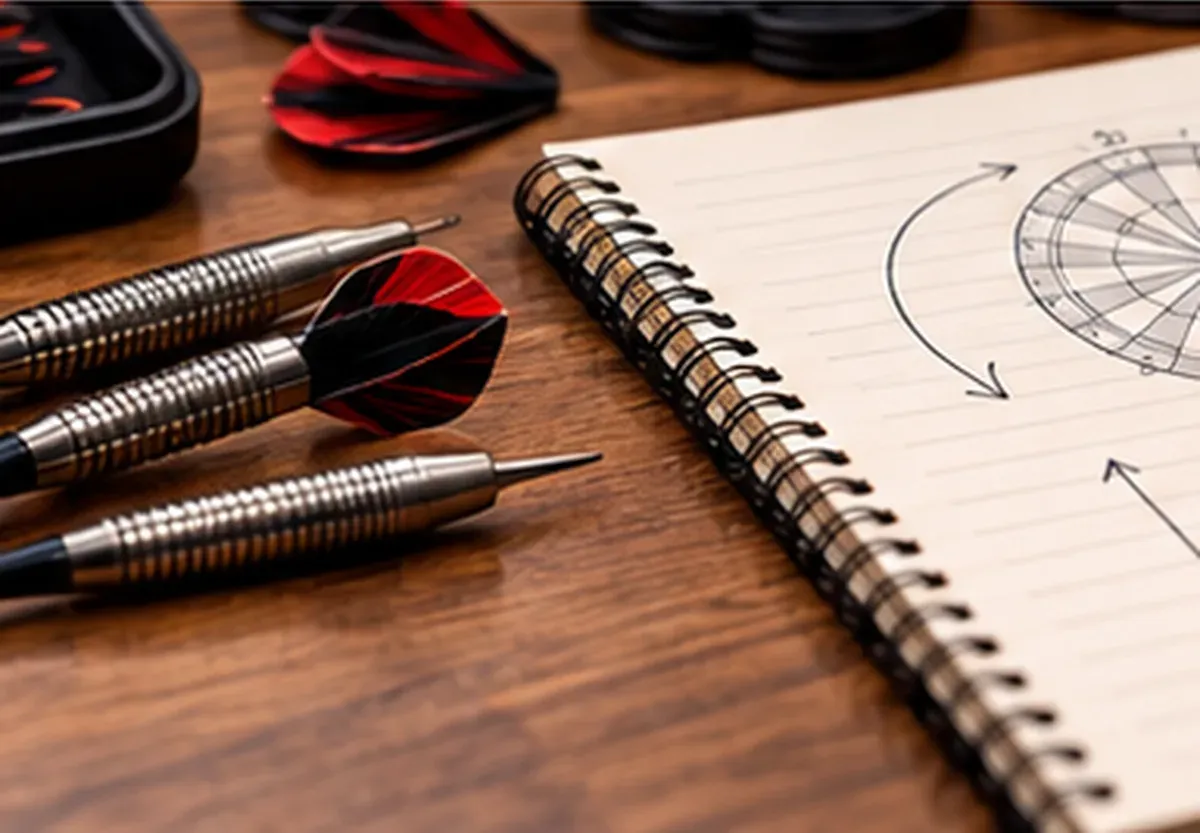
Throwing darts aimlessly at the board for an hour feels like practice, but it rarely makes you much better. Structured practice does. With clear targets, a simple way to measure progress and a mix of scoring, finishing and pressure drills, you can raise your average much faster. This page gives you proven darts practice routines, from five-minute warm-ups to full sessions, plus tips on tracking your progress and practising efficiently.
Why structured practice works
- Clear goals: you know exactly what you are trying to improve in each session.
- Measurable results: scores and counts show whether you are getting better.
- Pressure: targets and scores make practice feel more like a match.
- Variety: different drills train scoring, finishing and moving around the board.
Before you start, make sure your board is set up correctly and your throwing action is consistent. Our guide on how to throw darts covers the fundamentals.
Warm-up: five minutes
Start every session with a short warm-up. Throw a few relaxed darts at the treble 20 without worrying about the score. Focus on your stance, grip and follow-through. Then throw a round of darts at the bull to settle your aim. A warm-up prevents you from judging your form on the first cold darts of the day.
Scoring drills
100 darts at the treble 20
Throw 100 darts at the treble 20 and count how many hit the treble, how many land in the single 20 and how many miss the 20 altogether. Repeat this drill once a week and record the results. It is the simplest way to see whether your scoring is improving.
Three-dart average sessions
Play ten or twenty visits at the treble 20 as if you were playing a leg, and calculate your average per visit. Compare it week by week. If you also play the treble 19, track it separately, because many players are noticeably weaker on their second scoring bed.
Finishing drills
Round the doubles
Start at double 1 and work your way to double 20, then finish on the bull. Count how many darts you need in total. The fewer, the better. Variations: only move on when you hit a double with your first dart of a visit, or give yourself a maximum of three darts per double.
The 121 drill
Start on 121 and try to check out within nine darts. If you succeed, move to 122; if you fail, go back down to 121. This drill teaches you to combine scoring and finishing, and forces you to think about routes. Use our checkout chart to learn the best routes.
Bob's 27
This classic doubles drill was devised by English player Bob Anderson. You start with 27 points. In round one, throw three darts at double 1; in round two at double 2; and so on up to double 20. Each hit adds the value of that double to your score. If you miss with all three darts, subtract the value of that double instead. If your score drops below zero, the game is over. A high score requires consistent doubles all around the board, making it an excellent benchmark.
Accuracy and movement drills
Around the clock
Hit every number from 1 to 20 in order, then the bull. Move on only when you hit the current number. Harder versions use only doubles or only trebles. This drill builds accuracy across the whole board and is a good warm-up for matches.
Cricket against yourself
Play a game of Cricket against a target number of darts, for example trying to close all numbers within 30 darts. It sharpens your trebles on the 15 to 19, which many players neglect.
Pressure drills
- Must-hit finishes: set a rule that you cannot end the session until you have hit three doubles in a row.
- Match simulation: play legs of 501 against a target average, such as 50 or 60, and count legs won and lost.
- Play a friend: nothing replaces the pressure of a real opponent. Regular games against a slightly better player push you to improve.
Sample practice sessions
30-minute session
- Warm-up: 5 minutes
- 100 darts at treble 20: 10 minutes
- Round the doubles: 10 minutes
- Three legs of 501 against a target average: 5 minutes
60-minute session
- Warm-up: 5 minutes
- Scoring at treble 20 and treble 19: 15 minutes
- The 121 drill: 15 minutes
- Bob's 27: 10 minutes
- Match simulation: 15 minutes
Tracking your progress
Keep a simple log of your results: date, drill and score. Many players use a notebook or a darts scoring app. Look at trends over weeks, not individual sessions. A bad night is normal; a steady upward line over a month is what counts. Your three-dart average and checkout percentage are the two most useful numbers to follow. Read more about averages in our guide to the darts rules.
Practising with a partner
Practising alone is efficient, but practising with someone else adds competition and accountability. Try these formats:
- First to five legs: play short races of 501 against each other.
- Doubles duel: take turns at the same double, and the first to hit it wins the point.
- Handicap games: give the weaker player a head start so that both have a real chance of winning.
Playing against slightly stronger players is one of the quickest ways to improve, because it forces you to raise your level under pressure.
Practice tips
- Practise little and often. Three focused 30-minute sessions beat one tired three-hour session.
- Stop when you are tired. Practising a sloppy throw only reinforces bad habits.
- Change one thing at a time when working on your technique.
- Practise your weakest areas, not just the ones you enjoy.
- End on a positive: finish with a drill you are good at.
Setting realistic goals
Set goals you can measure and reach within a few weeks, such as raising your three-dart average by three points or improving your Bob's 27 score by 50. Small, steady improvements add up quickly. Avoid comparing yourself to professionals on television: compare yourself to where you were last month.
Finally, remember why you play. Darts should be enjoyable. If practice starts to feel like a chore, swap a drill for a fun game such as Cricket or Killer, and come back to the structured routines next time with fresh energy.
Frequently asked questions
How long should I practise darts each day?
Twenty to sixty minutes of focused practice is plenty for most players. Consistency over weeks matters more than long sessions.
What is the best drill for doubles?
Bob's 27 and round the doubles are two of the most popular and effective doubles drills.
How do I calculate my three-dart average?
Divide your total score by the number of darts thrown, then multiply by three.
Back to home